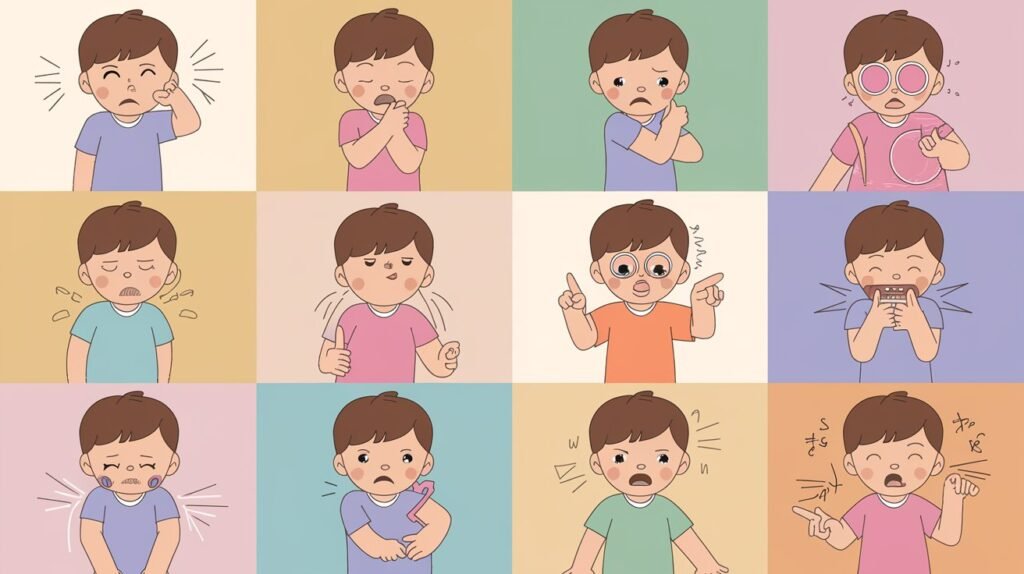
Common Thoughts We Hear from Parents:
“He doesn’t talk much, maybe he’s just shy?”
“I thought she’d start speaking on her own…”
If you’ve ever had thoughts like these, you’re not alone.
As parents, it’s natural to wonder:
- Is my child’s development on track?
- Should I wait a bit longer?
- Is it time to seek support?
That’s where speech therapy can offer clarity and care.
So, What Exactly Is Speech Therapy?
Speech therapy is a specialized service that helps children (and adults) communicate more clearly, confidently, and meaningfully.
It includes support with:
- Expressing themselves through words
- Understanding what others are saying
- Speaking clearly and with ease
- Using gestures, tone, and facial expressions effectively
- Addressing feeding and swallowing difficulties (yes—these are related too!)
It’s not just about pronunciation — it’s about empowering your child to connect with the world.
When Should You Consider Speech Therapy?
Every child is unique — but here are some early signs to watch for:
- Not using single words by 16 months
- Difficulty forming simple sentences by age 2.5
- Speech is unclear — even to close family
- Frequent frustration while trying to speak
- Limited eye contact, pointing, or shared attention
Don’t wait for a diagnosis or school referral.
Early support leads to stronger outcomes.
Who Provides Speech Therapy?
Speech therapy is provided by trained professionals called:
Speech-Language Pathologists (SLPs)
They are experts in:
- Assessing language development
- Diagnosing challenges
- Designing personalized treatment plans
What Happens in a Session?
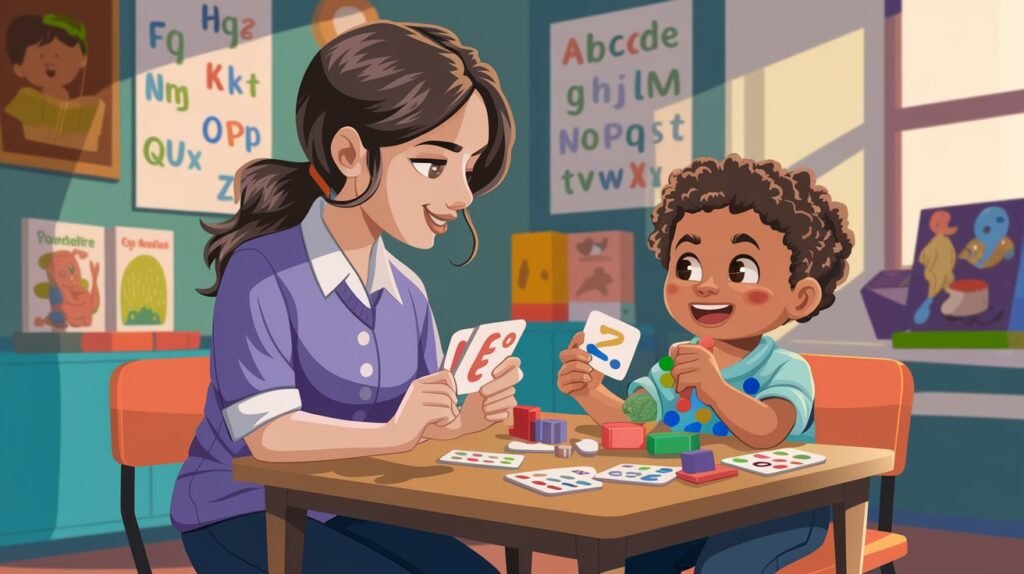
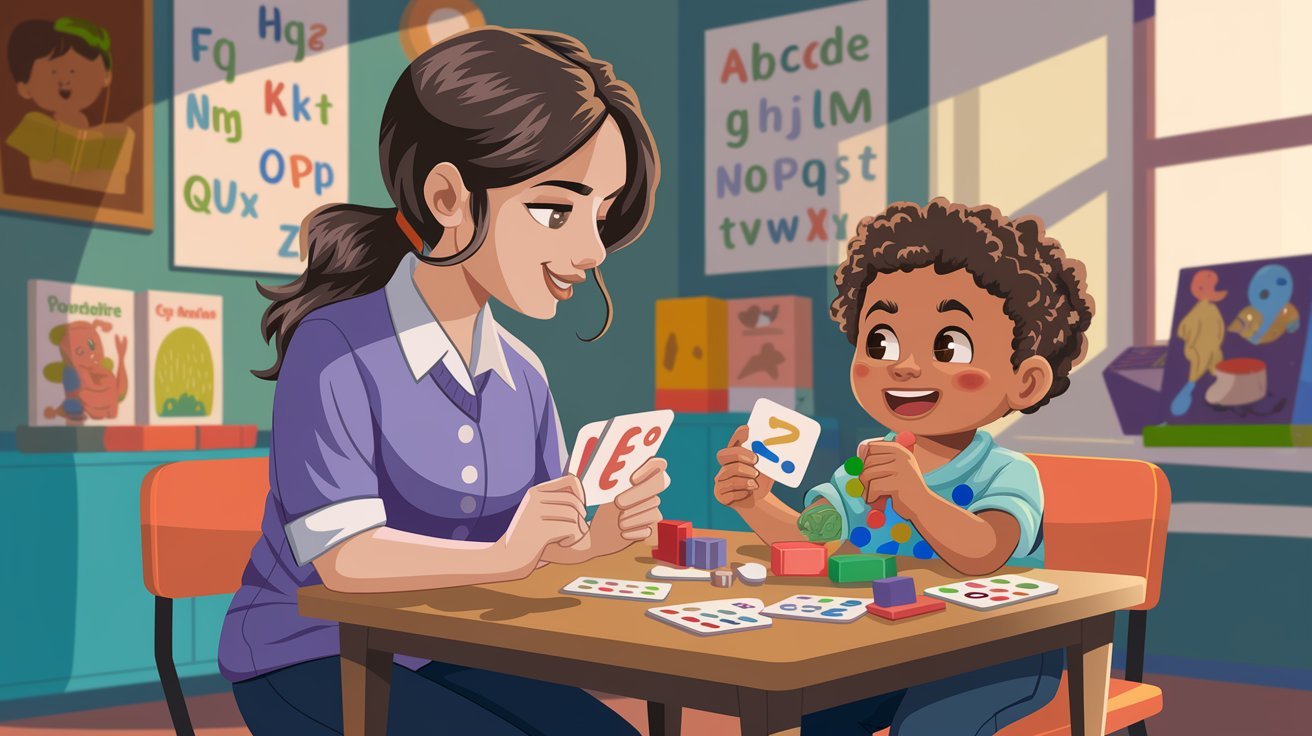
Forget stiff clinical rooms. Speech sessions are:
- Fun
- Play-based
- Centered around your child’s interests
You may see:
- Storytelling or book reading
- Turn-taking games
- Sound practice with toys or pretend play
- Parent-child coaching
- Use of gestures, sign language, or visual aids
How Can Parents Support at Home?
Your everyday moments are powerful therapy opportunities. Try this:
- Expand on what your child says
“Dog!” → “Yes! A big brown dog is running fast!” - Let your child lead during play
- Read together — even 5 minutes counts
- Use songs, signs, and rhymes to build fun around language
Your presence and play matter more than perfection.
FAQs About Speech Therapy
Q. Is it my fault my child has a delay?
A. No. Delays can come from many factors. What matters is your awareness and support now.
Q. Will therapy make my child speak right away?
A. Progress takes time. Therapy builds meaningful communication — not just speech, but gestures and confidence too.
Q. Do I need a referral to start?
A. Not usually. You can directly reach out to a therapist or clinic.
Q. When should I start?
A. Earlier is better. Even 1-year-olds can benefit from early stimulation and connection-based approaches.
A Gentle Note from Us
Every child’s journey is different.
There’s no “right” time — only the time that’s right for you to seek clarity and care.
This blog is meant to guide, not alarm.
If you notice signs or feel uncertain, reaching out doesn’t mean something’s wrong —
It means you’re choosing to support your child’s voice.
Looking for Guidance? We’re Here.
At Soulnest, we offer gentle, play-based speech therapy consultations built on empathy, clarity, and connection.
Whether you:
- Just want to ask questions
- Need a second opinion
- Or are ready to begin therapy
We walk with you — and your child — every step of the way.
Book a consultation with Soulnest
Let’s support your child’s voice — together.